 English
 日本語
日本語
 Italiano
 汉语
汉语
 Deutsch
 Français
 Español
 Português
 Türkçe
 Polski
 Українська
 한국어
한국어
 Việt
Việt
 ภาษาไทย
 Русский
 čeština
 Nederlandse
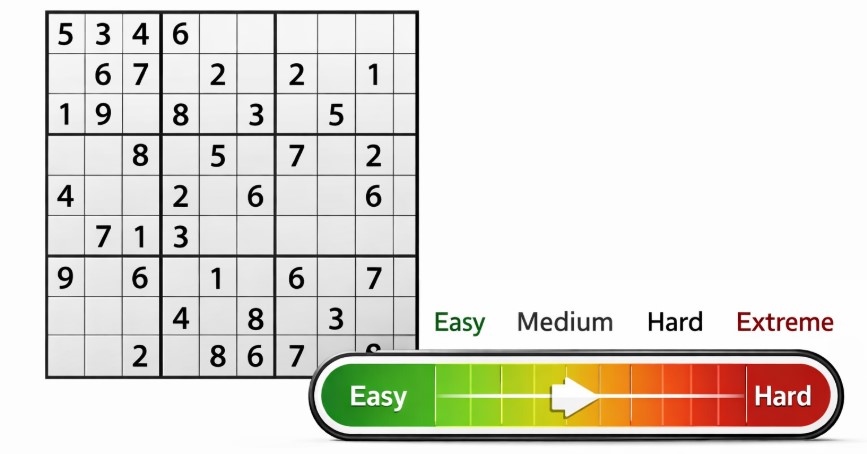

What “Sudoku Difficulty” Really Means
When people talk about Sudoku difficulty, they often assume it depends mainly on the number of clues or how quickly a puzzle can be completed. In reality, Sudoku difficulty levels are determined by much deeper factors related to logical complexity, required solving techniques, and the sequence of logical steps needed to reach a unique solution.
A common misconception is that fewer given numbers automatically make a Sudoku puzzle harder. While the number of clues does influence difficulty, it is not the decisive factor. Some puzzles with relatively many clues can still be classified as hard or even expert, while others with fewer clues may fall into the easy or medium category. This is because puzzle features and the type of reasoning required matter far more than quantity alone.
In most modern Sudoku grading systems, difficulty reflects the most advanced strategies a puzzle solver must use. If a puzzle can be solved using only basic techniques—such as simple scanning or single-candidate placement—it is typically rated as beginner or easy. As soon as the solution requires more complex logical deductions, like pairs, chains, or pattern-based reasoning, the difficulty rating increases to medium or hard.
At higher levels, such as expert, extreme, or diabolical, puzzles demand multiple layers of reasoning and precise execution of advanced strategies. These puzzles are not about guessing; they rely entirely on logic, but the algorithmic evaluation shows that many conditional paths and dependencies must be analyzed before progress is possible.
Today, rating methods often combine human vs computer difficulty assessments. Computers analyze puzzles by counting required techniques, estimating the depth of logic, and assigning a rating score, while human solvers judge difficulty based on perceived effort and familiarity with techniques. The final difficulty level is therefore a balance between mathematical analysis and practical solving experience.
In short, Sudoku difficulty is not about speed or luck—it is a measure of logical challenge, strategy complexity, and how demanding the solving process truly is.
The Role of Solving Techniques in Difficulty Levels
One of the most reliable ways to determine Sudoku difficulty levels is by analyzing the solving techniques required to complete a puzzle. Modern Sudoku grading systems focus less on visual appearance and more on which logical tools a puzzle solver must apply and how often those techniques are needed.
Easy Sudoku: Basic Techniques Only
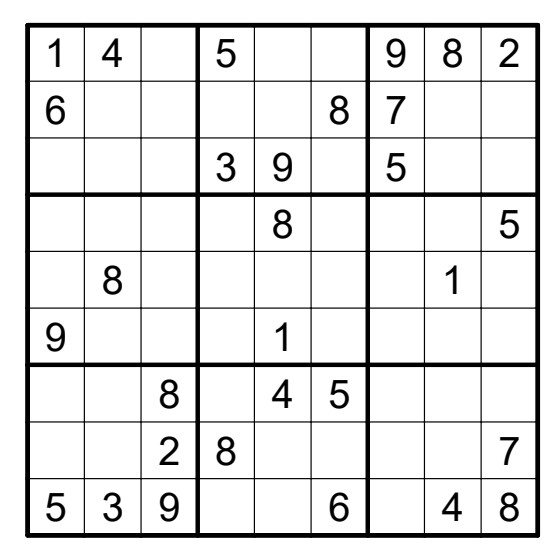
Example of an easy Sudoku puzzle
Easy puzzles are designed to be solved using only basic techniques. These typically include simple scanning, direct placement, and obvious logical deductions where a number can only fit in one cell. The logical steps are short, independent, and easy to follow, which keeps the logical complexity low.
Key characteristics of easy Sudoku puzzles:
- High number of given numbers
- Clear progression from start to finish
- No need for advanced pattern recognition
- Low difficulty rating in both human and algorithmic evaluation
Such puzzles are usually labeled beginner or easy and are ideal for learning Sudoku fundamentals.
Medium Sudoku: Structured Logical Deductions
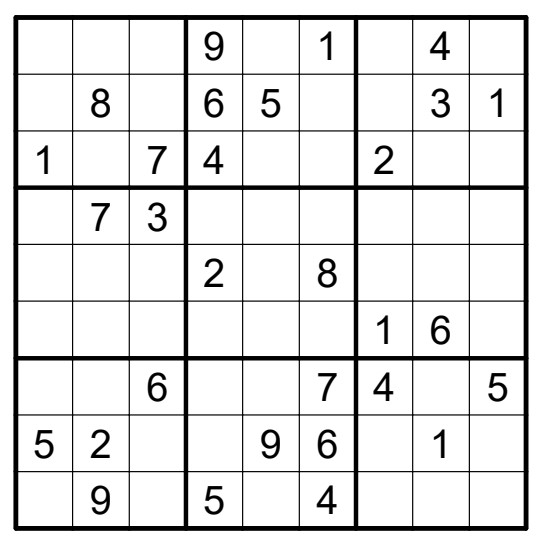
Example of a medium difficulty Sudoku puzzle
Medium-level puzzles require more structured reasoning. While basic techniques still play a role, progress often depends on combining multiple logical deductions. At this stage, solvers may need to track candidates across rows, columns, and boxes, increasing the overall difficulty level.
What makes medium Sudoku harder:
- Fewer immediate placements
- Increased dependency between logical steps
- Introduction of intermediate solving techniques
- Greater emphasis on puzzle features and number relationships
These puzzles sit at the boundary between casual play and serious logical challenge, often classified as medium or normal.
Hard Sudoku: Advanced Strategies and Deep Logic
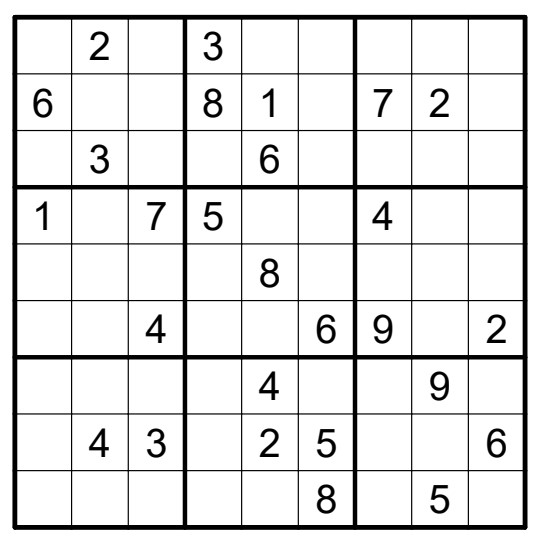
Example of a hard Sudoku puzzle
Hard puzzles significantly raise the Sudoku difficulty by requiring consistent use of advanced strategies. Simple deductions are no longer enough, and the solver must analyze multiple possibilities before making progress. This dramatically increases the logical complexity and the rating score assigned by grading algorithms.
Typical traits of hard Sudoku puzzles:
- Limited progress using basic logic
- Frequent use of advanced strategies
- Long chains of dependent deductions
- High algorithmic evaluation score
- Often labeled hard, expert, or extreme